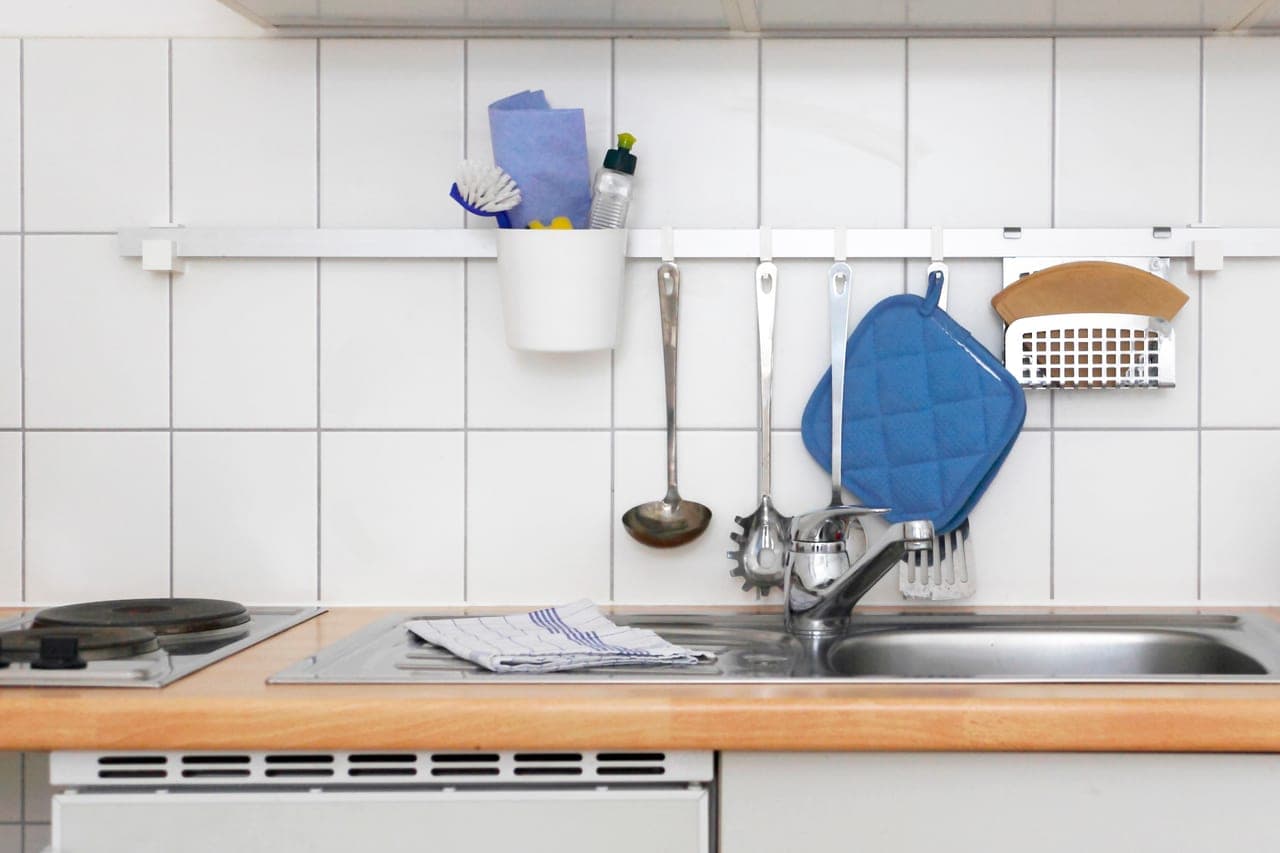
 Expenses for the complete renewal of a fitted kitchen (sink, stove, built-in furniture and electrical appliances) in a rented property are not immediately deductible as income-related expenses from rental income. As the BFH ruled in its judgment of 3 August 2016 (IX R 14/15), such expenses must instead be depreciated over a period of ten years by way of depreciation for wear and tear (AfA).
In the case at issue, the plaintiff had removed fitted kitchens in several rental properties owned by him and replaced them with new ones. He took the view that the resulting expenses were immediately deductible as so-called "maintenance expenses". The tax office allowed an immediate deduction only for the costs of installing the stove and sink as well as for those electrical appliances whose total costs did not exceed the threshold for low-value assets (€410); the expenses for the built-in furniture were spread by the tax office over the expected useful life of ten years. The tax court dismissed the action brought against this as unfounded.
The BFH confirmed the dismissal of the action, abandoning its previous case law. The reassessment is essentially based on a changed understanding of the term "essential components" in residential buildings. This includes those items without which the residential building is "unfinished". The BFH had previously held that the sink installed in a fitted kitchen was to be regarded as a building component and that, depending on regional customary practice, this could also apply to the kitchen stove. Accordingly, expenses for the renewal of these items were immediately deductible as maintenance expenses.
In contrast, the BFH now assumes that the sink and stove are no longer non-independent building components. The BFH justifies this by reference to the changed equipment practice. Accordingly, the individual elements of a fitted kitchen constitute an independent and, moreover, uniform asset with a useful life of ten years. The acquisition and production costs are therefore to be recognised for tax purposes only by way of AfA.
Frequently asked questions
Frequently asked questions
Are the costs of completely renewing a fitted kitchen in a rental property immediately deductible?
No. According to the BFH ruling of 3 August 2016 (IX R 14/15), the expenses for the complete renewal of a fitted kitchen do not constitute immediately deductible maintenance expenses. They must be claimed as income-related expenses on rental income via depreciation (AfA) over a useful life of ten years.
Why are sinks and stoves no longer considered integral components of buildings?
The BFH has abandoned its previous case law due to changes in standard fittings practice. Today, sinks and stoves are no longer components without which a residential building would be deemed 'incomplete.' Instead, together with the other elements of the fitted kitchen, they form a separate, uniform economic asset.
Over what period must a fitted kitchen be depreciated as an asset?
A fitted kitchen must be depreciated as a single asset over a useful life of ten years. The total acquisition and production costs – including sink, stove, built-in furniture, and electrical appliances – are included in the basis for straight-line depreciation (AfA).
Can individual electrical appliances be immediately deducted as low-value assets?
Under the new BFH case law, a fitted kitchen is treated as a single uniform asset, so individual appliances generally cannot be written off separately under the low-value asset (GWG) threshold. However, freestanding electrical appliances that are not permanently integrated may be assessed separately if they do not form part of the uniform asset 'fitted kitchen'.
What are the practical consequences of the ruling for landlords?
Landlords can no longer deduct the costs of a complete renewal of a fitted kitchen in the year of payment, but only spread over ten years. This significantly worsens the liquidity impact of the modernization and should be taken into account when planning renovation measures.