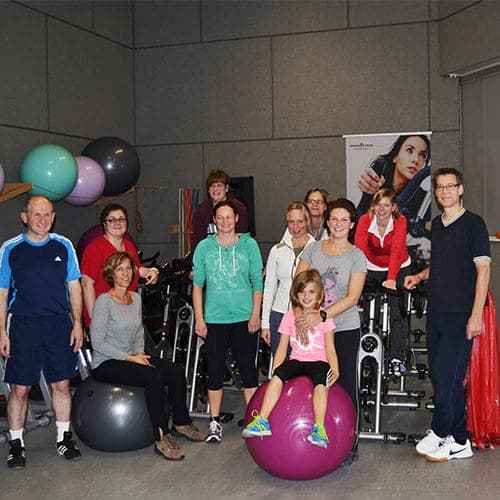
Health Promotion:
Employers may pay their employees for so-called prevention courses in addition to the wages owed. These prevention courses must serve to improve the general state of health and workplace health promotion. The maximum amount of benefits is € 500.00 per employee per calendar year (§ 3 Nr. 34 EStG).
Special Provider Certification:
The tax office may not require certification of the prevention course provider beyond the statutory requirements as a condition for the tax exemption. This was confirmed by the Bremen Tax Court in a recent ruling (judgment of 11 February 2016, 1 K 80/15). In the case at issue, the employer had covered the fees for its employees for courses including abdominal, back and spine exercises, courses for structural body therapy and massages. The tax office treated these benefits as subject to wage tax. The reasoning: the providers of these courses did not meet the requirements set out in the "Prevention Guideline" (Leitfaden Prävention), in particular they did not hold any specific certification.
No Further Restrictions:
The courses offered by the employer must meet the statutory requirements of Book Five of the German Social Code (Fünftes Buch Sozialgesetzbuch) with regard to quality, dedicated purpose and targeted aim. The tax office may not impose any further requirements beyond these. According to the court, however, the massage services offered by the employer did not qualify as tax-free health promotion. The Senate could not determine to what extent the massage services served "to improve the general state of health". In this context, the court emphasised that a provider of prevention services must be qualified at least in the "therapy field" or the "sports field".
Frequently asked questions
Frequently asked questions
Up to what amount are prevention courses provided by the employer tax-free?
Employers may pay for prevention courses for their employees, in addition to the wages owed, tax-free up to a maximum of EUR 500 per employee and calendar year. The legal basis is § 3 Nr. 34 EStG. The courses must serve to improve general health and promote workplace health.
Can the tax office require a special certification of the course provider for the tax exemption to apply?
No. According to a ruling by the Finanzgericht Bremen (11 February 2016, 1 K 80/15), the tax office may not demand any certification of the provider beyond the statutory requirements, such as certification under the "Leitfaden Prävention" (Prevention Guideline). The only decisive factor is that the courses meet the requirements of the SGB V in terms of quality, designated purpose, and targeted focus.
What requirements must prevention courses meet to qualify for tax exemption?
The courses must meet the statutory requirements of the Fifth Book of the German Social Code (SGB V) in terms of quality, designated purpose, and targeted objectives. The provider should be qualified at least in the area of therapy or sports. Typical eligible courses include abdominal, back, and spinal exercise classes.
Are massage services provided by the employer recognized as tax-free health promotion?
According to the Tax Court of Bremen, pure massage services generally do not fall under the tax exemption pursuant to § 3 Nr. 34 EStG. It is not readily apparent to what extent massages serve to improve the general state of health. A tax exemption is therefore typically ruled out in such cases.
Must health promotion benefits be provided in addition to regular wages?
Yes. The tax exemption under § 3 Nr. 34 EStG requires that the benefits be granted in addition to the wages owed anyway. Converting existing gross wages into tax-free prevention benefits is therefore not eligible.